
Stormwater Areas: Manage or Be Managed
Designated stormwater areas have too often been overlooked. Property owners and managers see the area as a must have that they know very little about. In many subdivisions, the designated stormwater area is the forgotten, overgrown area that we know little about.
We don't know what we don't know, and unless we put ourselves in unfamiliar surroundings, we will continue in the unintelligent cycle. In an attempt to learn what I don't know, I arranged to go to a third-world culture last year in India. Going on the trip, I had no idea what I was in for--which only makes since because I didn't know all that I didn't know. I was told the crowds, filth, and smell would overwhelm and shock me. The warnings were received and certainly came to pass.

Walking on the streets of crowded villages, I saw where sewage found its own way to the ditches along the street. Pots, full of who knows what, were dumped wherever convenient. The more popular roads through the city in India had concrete slabs over the ditches acting as sidewalks for pedestrians. Walking through the city, I kept a close guard on the ground. Strategically placing each step, I avoided the cracked and busted slab that would potentially send me into the stormwater and sewage below. Considering their municipality's management of stormwater and sewage, I realized there was no true management or stewardship of their environment. While riding a boat down the Brahmaputra River, I saw where these ditches dumped waste into the stream. As a side note, I also saw children playing in the same water as their mothers washed clothes in that contaminated water as well as fish being sold on the streets caught from the untreated waters.
No doubt, the city I was in had a stormwater system in place. At some point, a group of individuals planned extensively how the stormwater and waste water would be managed based on their tolerance levels, current infrastructures, and available budget. The stormwater management plan was set into motion, and unfortunately never considered again. Today, the structures in place are outdated and overwhelmed. They don't work.
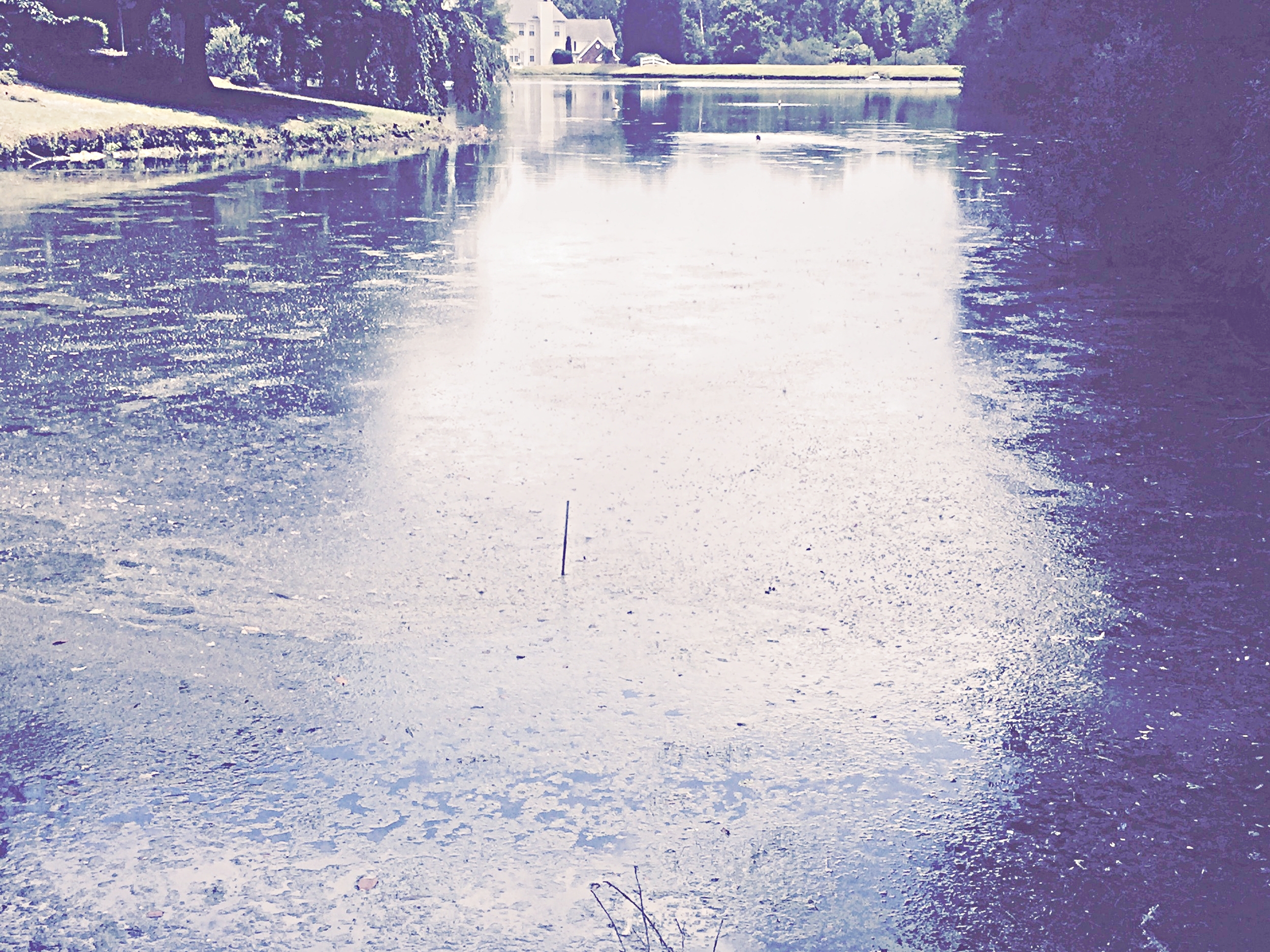
Back home, in my comfortable city full of southern charm, I see communities that have done the same as the third-world culture. They have forgotten about the structures put in place for stormwater management in their own subdivisions. Riprap in emergency spill ways and on banks have not been replaced causing erosion. Out-basins have become full of sediment causing stagnate water to stand and become obnoxious to both the eyes and the nose. Overgrown ponds are a nuisance and hinder any type of management. Today, the structures in place are forgotten. They don't work.
Meanwhile, municipalities understand the environmental effects of smaller communities on the city's watershed. Rather than allowing stormwater management to become outdated and overwhelmed as in India, they enforce best management practices. This means that subdivisions and property owners make improvements on a reactionary basis. These improvements come when it is expensive, perhaps cheaper than fines, yet more expensive than they should have been. Lately, because property managers have not managed the properties, designated stormwater areas have managed them. However, changes are being made. Finding a stormwater specialist is becoming popular as property managers realize it is cheaper to maintain than repair. I'd like to also think property managers also see a responsibility to be a good steward of their land as well.
The trend in stormwater management that we are moving toward works. It works because it is cheaper, it is more beautiful, and it is responsible. While I believe that our world is decades if not generations away from having a serious water crisis, we can eliminate the crisis by implimenting stormwater management.
To better understand what industrial and agricultural leaders say about the world's EMERGING WATER GAP watch the video below.
Benjamin Buck owns Buck Outdoors Stormwater Specialists. Buck Outdoors exists to take the burden of stormwater stewardship off the property managers. Their clientele range from Home Owner Associations to businesses. To learn more about Buck Outdoors Stormwater Specialists visit their website.
Take Steps to Prevent Spread of Zika

Buck Outdoors Stormwater Specialist does free consultation for mosquito control on your designated stormwater area.
There is still a lot that we we don't know regarding the Zika virus. However, we do know that it has spread into the United States and there are at least 18 known cases in South Carolina alone. We also know that the effects of Zika virus on a pregnant mother is serious.
Zika virus is a mosquito-borne disease meaning that the spread can be fast and effect you without coming into direct contact with a person who has the disease.
The best defense against contracting the Zika virus is to guard against mosquitoes in your own backyard and community. Here are a few simple actions you can take against the Zika Virus:
1. Keep debris out of stormwater system and pipes in your neighborhood.
2. Make sure that your gutters and downspouts are free of debris and drain properly.
3. Eliminate standing water in your yard with french drains.
4. Be sure that any containers left outside do not hold water for any length of time.
5. Make sure that your neighborhood's designated stormwater area does not have sediment build up which prevents rainwater from running off properly.

Reaping Residential Rainwater Runoff
The state of South Carolina gets more than the national average of rain fall each year. With runoff from the Blue Ridge Mountains into Greenville's watershed, our municipalities have lots of water to purify each day. As members of our community each of us can play a role in helping maintain a clean watershed. Harvesting runoff can be simple and fun.
Over the last several years we have heard a lot about rain barrels. Such storage containers collect rainwater from rooftops. Mosquito-proof containers are used to store up rainwater runoff for later use. The water is great for watering the lawn or garden.
The benefits of harvesting rainwater runoff includes:
1. PROTECTING YOUR LANDSCAPE. A rain barrel will eliminate much of the water flow coming down your drain spouts into your landscape.
2. LOWERING UTILITY BILLS. Using water from the rain barrel between rains prevents over use of water from the utility company resulting in a lower monthly bill.
3. IMPROVING WATER VALUE. Most plants actually thrive better with rainwater as opposed to city water. The byproducts in the treated city water is not best for your landscape and garden.
When thinking in terms of how big of a rain barrel to use, it really depends on your use. However, it may be helpful to consider that a 50 gallon barrel will fill up from a .5" rain fall off of a 200 square foot roof. Keep in mind that in 2010, Greenville received 30 storms that would have produced over .5" of rain.
For more details on how your family can harvest rainwater runoff, check out these sites:
PRESS RELEASE

GREENVILLE, SC - Schedule for Immediate Release. April 21, 2016.
Residents of Greenville County are known for being responsible for their environment. And at the foothills of the Blue Ridge Mountains and dotted with small and large lakes, the upstate of South Carolina has a lot to be responsible for.
A local resident is taking the responsibility to care for the Saluda-Reedy watershed on his shoulders. Benjamin Buck, of Greer, spoke with a civil engineer from Greenville's Engineering Division in the fall of 2015. They discussed the issues that Greenville faces through growth. The casual conversation reminded Buck of something his dad told him years ago. "Stormwater system management was a small business idea my dad came up with 20 years," Buck said. "Dad thought that as ponds go through the engineering and developement processes then eventually handed over to land owners the best management practices would fade into a distant memory as the land owner focused on his business and forgot about the pond."
Taking his father's vision, Buck now helps property owners and HOAs forget about the ponds. By managing the ponds for land owners, Buck keeps the ponds in working order and up to code. Landowners see a return because they do not have to bear the burden of the pond, keep good relationships with neighbors by having a cared for stormwater system and don't have to worry about the bad press of violations and costly future repairs.
Buck says that having a stormwater specialist improves the efficiency of the system as well as extend the life of the detention and retention ponds. In the past some property managers have asked landscapers to care for the stormwater system area. However, Buck is looking at ponds now that are clogged with debris and had changes done to them not permitted by the original permit. "These land owners are in trouble and don't even know it," Buck said.
Buck Outdoors Stormwater Specialists officially launched in April of this year. Within days, word spread and Buck immediately had work. "This is not a fad," Buck predicts, "Municipalities take protecting their watersheds seriously and that wont change as they tighten down on codes." Living in a community built around of the beauty of Reedy River helps Buck's chances at being right. The upstate of South Carolina has much to be proud of and now they have help keeping South Carolina beautiful.