
Recovery Management or Preventative Management: Which Facility Manager Sleeps Better at Night
Once you leave work, you spend your evening with friends and family. You wind down from the evening and head off to bed. One question, “Did you spend the evening nervously checking your texts and email, or were you able to enjoy time of relaxation?” As a facility manager, so many responsibilities fall on your shoulders. When something goes wrong, you’re the one called. The stress and frustration don’t disappear when you leave the facility. However, facility managers take back their evenings with a shift. A shift of how you look at your site. The infographic below compares the two management styles. It’s a shift to preventative management.
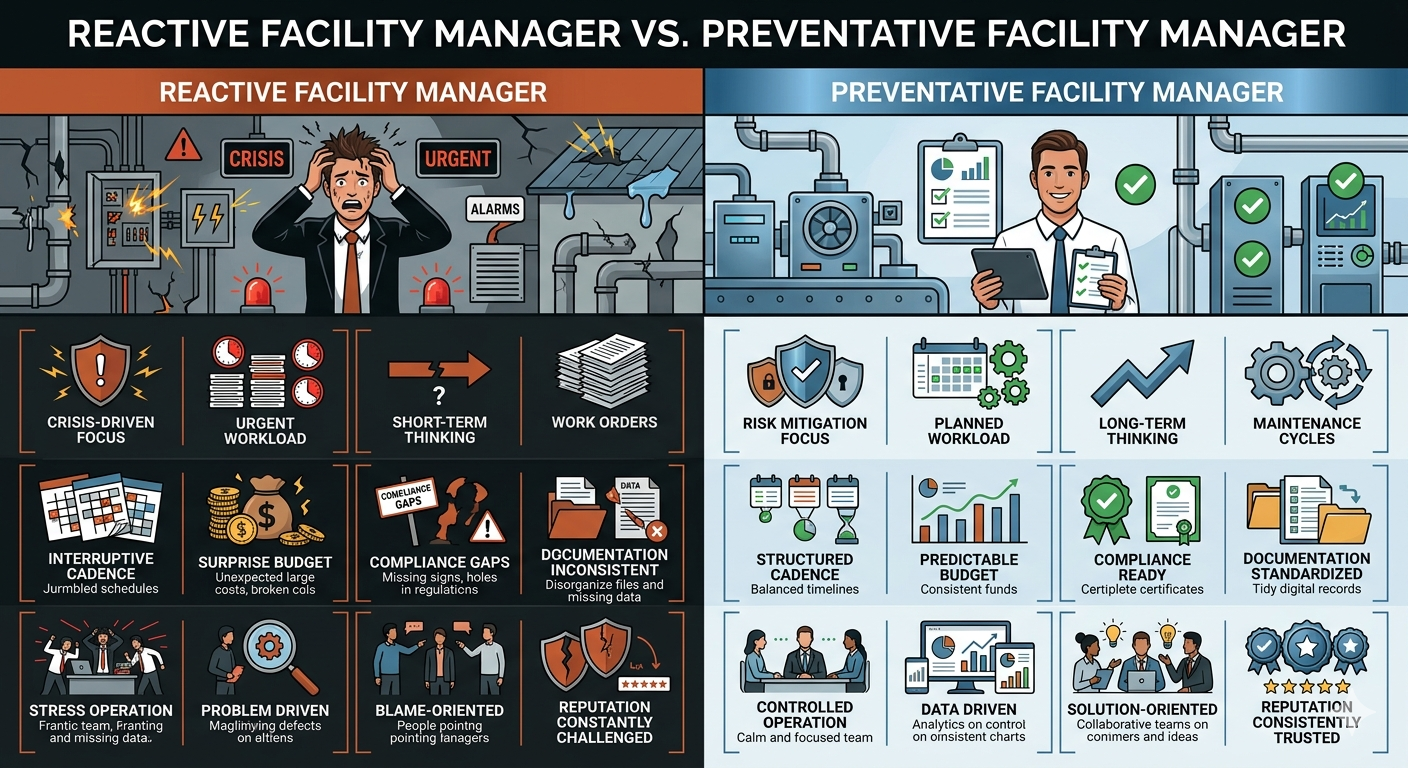
As told, “It’s easier said than done.” However, in my years of working with facility managers, I’ve noticed the perspective shift pays big dividends for the company and for the manager. Urgency is replaced with planning. Instead of looking down at your feet at today’s deadlines, the preventative manager spends his day planning with a more strategic, long term thinking. The preventative manager allows maintenance cycles to create a structured cadence with a predictable budget. When regulators come on site they are ready with standardized documentation. Operational stress is replaced with control as data the facility manager is not asking who made the mistake, but strengthening solutions. In the end, the recovery manager’s reputation is challenged as failures compile and stress continues to drive the recovery manager into interruption, surprises and more inconsistencies.
Gain support as a facility manager with your stormwater infrastructure. Visit these pages to get started: